Black Holes (All you need to know)
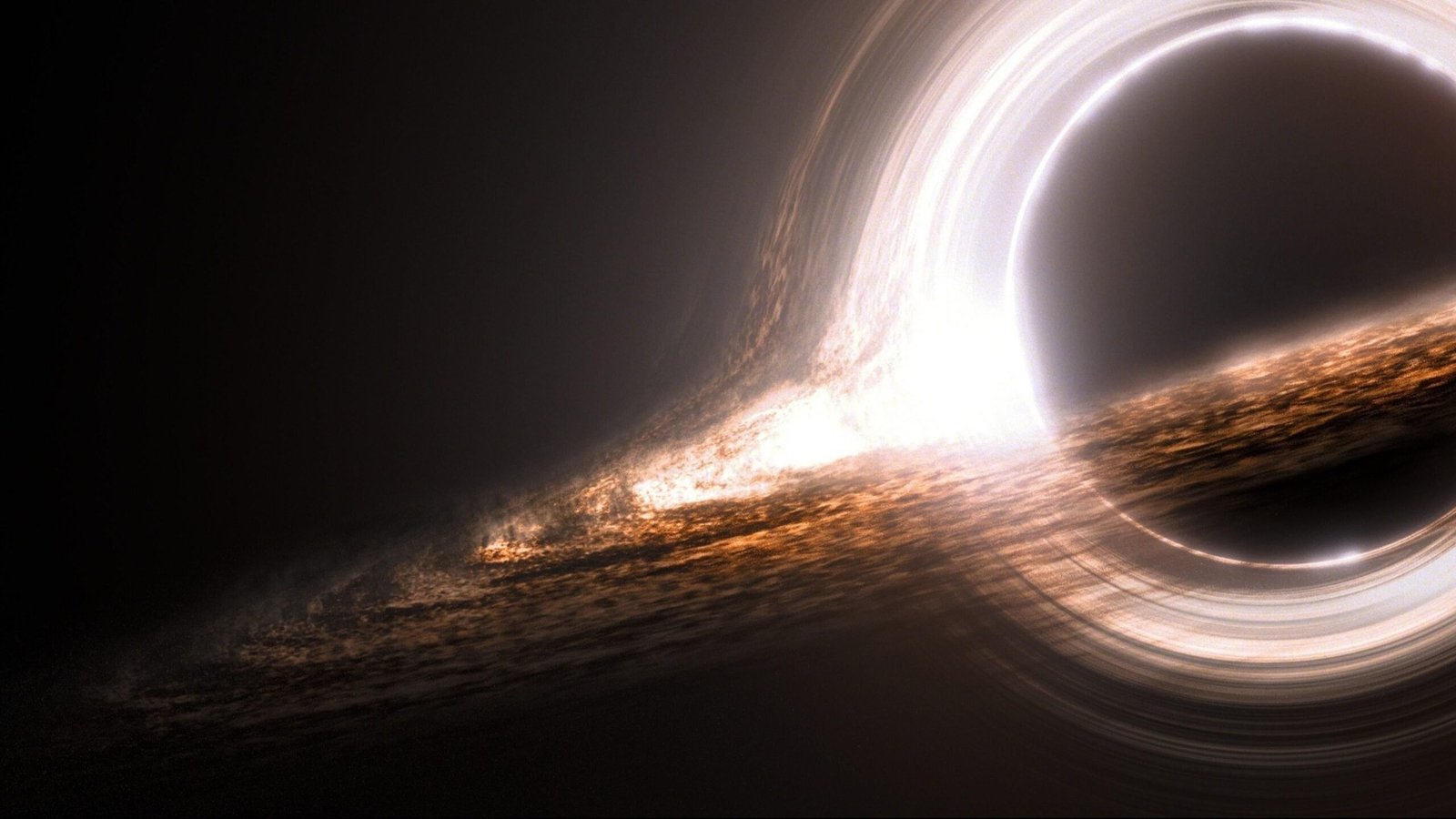
Black holes are one of the most mysterious and fascinating objects in the universe. They are formed from the remnants of massive stars that have collapsed in on themselves, creating a gravitational field so strong that nothing, not even light, can escape. In this article, we will explore everything you need to know about black holes, including their formation, characteristics, and impact on the universe.
Formation of Black Holes:
Black holes are formed when a massive star runs out of fuel and can no longer support itself against the force of gravity. The outer layers of the star collapse inward, compressing the core to an extremely high density. If the mass of the collapsed core exceeds a certain limit, known as the Chandrasekhar limit, gravity becomes so strong that it overcomes all other forces, and the core collapses to a point of infinite density and zero volume, known as a singularity.

Characteristics of Black Holes:
One of the defining characteristics of black holes is their event horizon. This is the point of no return beyond which nothing, not even light, can escape the gravitational pull of the black hole. Anything that passes through the event horizon is pulled towards the singularity at the center of the black hole, where space and time become infinitely warped.
Black holes are also characterized by their mass, spin, and electric charge. The mass of a black hole is the amount of matter contained within it, while the spin refers to the rate at which it is rotating. The electric charge of a black hole is related to the presence of charged particles within it.
Types of Black Holes:
There are three main types of black holes: stellar black holes, intermediate black holes, and supermassive black holes:
Stellar black holes are the most common type and are formed from the collapse of a single massive star. They typically have a mass of between 5 and 20 times that of the sun.

Intermediate black holes are thought to be formed by the merger of smaller black holes or the collapse of a cluster of stars. They have a mass of between 100 and 100,000 times that of the sun.

Supermassive black holes are the largest type and are thought to exist at the center of most galaxies, including our own Milky Way. They have a mass of millions or even billions of times that of the sun.

Impact of Black Holes:
Black holes have a significant impact on the surrounding environment, as they can disrupt the orbits of nearby stars and planets and cause matter to accrete onto the black hole, emitting radiation and creating powerful jets of particles.

Black holes also play a key role in the evolution of galaxies. Supermassive black holes at the center of galaxies can influence the formation and evolution of stars and gas in the galaxy, regulating the growth and shape of the galaxy over time.
Despite their mysterious and ominous nature, black holes are a fascinating and crucial part of our understanding of the universe. Through ongoing research and observation, we can continue to unlock the secrets of these enigmatic objects and their impact on the cosmos.
Is Our Solar System’s Mysterious ‘Planet 9’ Really a Grapefruit-Size Black Hole?
According to two physicists, we ought to investigate the possibility that our solar system contains an antiquated black hole the size of a grapefruit. And that tiny, heavy object might really replace the so-called Planet 9, a hypothetical planet that some astronomers believe could be pulling on other bodies in our solar system.
Does that suggest a black hole is indeed lurking in our region of space? No, the scientists said. But they have put together a case for it that they believe is strong enough to call for study.
This is how it goes:
“There are a few minor objects that act abnormally that are located far away in the extreme limits of the solar system, past the region where Neptune, our most distant planet known, orbits. These “trans-Neptunian objects” (TNOs) tend to spin along axes that point towards one wide area of the sky, away from the larger known planets, and they cluster together in peculiar ways. The TNOs orbit in a different plane than the eight known planets, which is also crucial. That could mean that another force with greater gravitational pull is pulling on them.”

Some astronomers have studied that peculiar pattern, performed some calculations, and come to the conclusion that there must be another planet in the universe, one with a mass between 10 and 20 times that of Earth with an eccentric orbit that transports it hundreds of times farther from the sun than Earth does. Although it is a strange notion that goes by the name of “Planet 9,” astronomers take it seriously. Astronomers have been searching the solar system’s outermost regions with optical and infrared instruments for Planet 9 for many years.
One of the two astronomers who came up with the notion, physicist Jakub Scholtz of Durham University in England, said, “We realized that the gravity is the important thing.” “A planet is not necessary. It’s a planet, which is the most commonplace or perhaps the most rational answer. But as theoreticians, we are aware that primordial black holes are just one of the many new, extremely intriguing theoretical bodies that early-universe cosmology might easily introduce.